by Emil O. Foofnick, grayer now, but still turning the crank
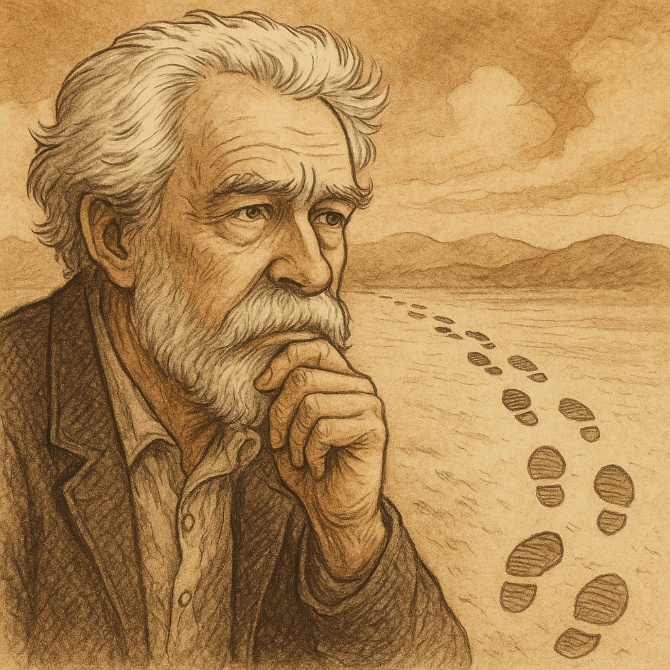
A song once asked what good is living if you’re nothing when you die. I won’t quote it—lawyers get the hiccups—but I know the feeling. If a strong wind can erase every footprint you left behind, what was the walking for?
I used to think the point was to leave something that wouldn’t blow away. A name etched in stone. A building with your initials in the cement. But I’ve come to believe it’s not the statue that matters—it’s the spin. Momentum. You nudge something good into motion—kindness, steadiness, listening—and it keeps going, even when you’re not there to crank the handle.
Start close. Folks won’t remember your resume, but they’ll remember if you looked up from your glowing rectangle and actually listened at the dinner table. They’ll remember if you could say, “I was wrong,” without a “but” welded on the end. The good stuff’s small and sticky: spaghetti Tuesdays, the old joke that limps its way back every year, bedtime stories read in the same silly voices. If you’ve got kids, write blessings in lunchboxes. If you’ve got elders, catch their stories before the porch light flickers out.
Friends? They’re family you had to invite. Don’t wait for storms to check on them—weather friends like you weather tomatoes: regular attention and a little compost. A simple note now and then—“thinking of you, what’s one bright spot?”—can keep the connection from rusting shut. A casserole on the porch speaks clearer than a fancy toast.
Kindness and respect aren’t decorations. They’re gloves for the work of being human. When you disagree, start with what the other person treasures—truth, fairness, safety. Ask the question that calms the fire: “What led you there?” Use small true words. Big ones just cast shadows. And when it’s done, leave the door open.
Now the land under your boots. You don’t have to be perfect, just consistent. Walk when your legs will do the job. Mend what can be mended. Learn the birds by name and thank the folks who keep your street from falling apart. That’s how you love a place until it loves you back.
As for work—be useful, not famous. Do it clean, do it fair, leave fewer sharp edges for the one who comes next. Pass on your know-how. Stake your name to something good and deep, like quality or kindness, and drive it so firm they can hitch a wagon to it.
End your days with five quiet minutes. What gave me life? Where did I make a mess? What will I try again tomorrow? Gratitude doesn’t need a mountain—just cinnamon in your coffee or a dog who finally listens.
You don’t need a sermon, just a rhythm. Tend your portion. Family, friends, street, creek, shop, self. Do it kindly, hat in hand, and often enough that goodness grows a habit.
Live like that and when the wind comes, it’ll find you were never chasing monuments. You were building motion. You’ll be something when you die—a story that still works when you’re gone.
That’s all I have to say; I will say no more.
Leave a Reply